
What Defines a High-Quality Temporary Traffic Control Plan (TTCP)?
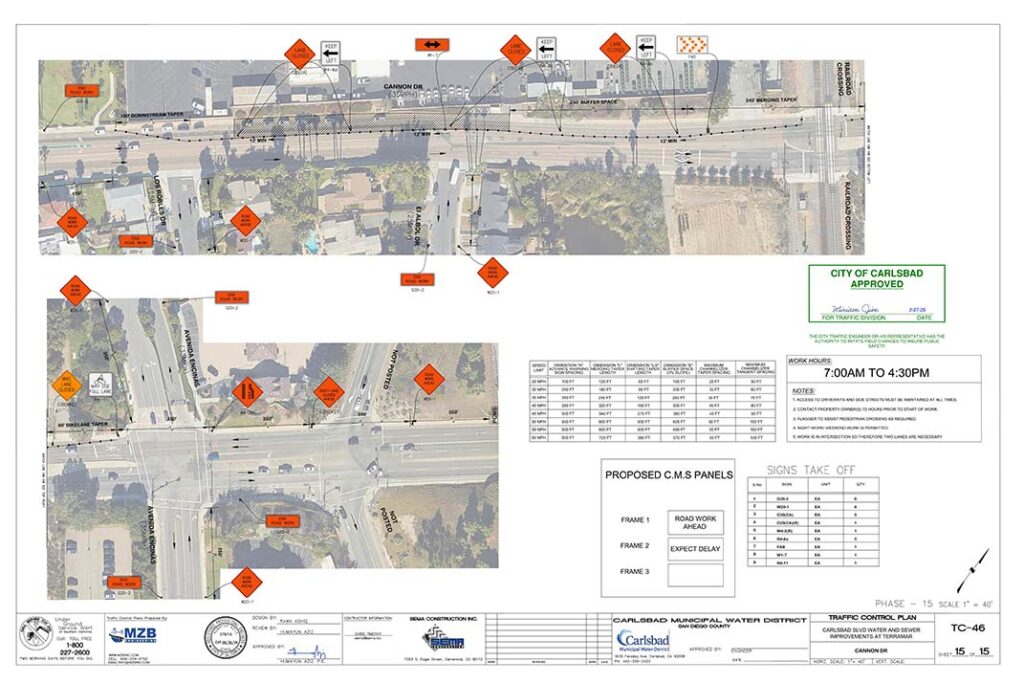
A well-prepared Temporary Traffic Control Plan (TTCP) is more than just a requirement—it’s a critical tool for ensuring safety, maintaining mobility, and keeping projects running smoothly. From utility work to crane operations, every project that affects the roadway needs a clear and compliant traffic control strategy.
At MZB Engineering Inc., we focus on creating precise, approval-ready TTCPs that reduce delays and prioritize public safety. Here’s a refreshed look at what makes a TTCP truly effective:
1. Reflect Real-World Site Conditions
Your plan should accurately represent what exists on-site, including lane striping, traffic signals, intersections, driveways, curb zones, and signage. Any temporary impacts—like blocked driveways or covered signs—must be clearly indicated.
2. Keep Phases Clear and Simple
Whenever possible, dedicate one sheet per phase. Minimizing match lines helps reviewers and field crews easily understand the plan.
3. Plan for All Road Users
A strong TTCP considers everyone on the road—drivers, pedestrians, cyclists, and transit users. Accessibility and safety should never be compromised.
4. Use Standardized Signage
All signs must follow MUTCD standards and include proper codes. Each sheet should feature a clean legend showing only the signs used, without cluttering the plan with sign images.
5. Clearly Define the Scope of Work
Describe the work in straightforward terms and use visual elements—like alignment lines—to show areas such as trench paths or work zones.
6. Develop Logical Work Phases
Each phase should follow a clear sequence, be easy to identify, and account for overlapping construction activities where necessary.
7. Minimize Road Closures
Avoid full closures when possible. Instead, use partial lane closures, staged construction, or contra-flow setups to maintain traffic movement.
8. Maintain Pedestrian Access
Never close more than one crosswalk at a time. Safe pedestrian routing must always be preserved.
9. Ensure Safe Clearance Near Excavations
Maintain at least a 5-foot buffer between open trenches and active travel lanes, and clearly show this in the plan.
10. Highlight Open Trenches
Use appropriate warning signage on all approaches to alert drivers and ensure visibility of hazards.
11. Space Lane Closure Signs Properly
For extended closures, place warning signs after intersections and at regular intervals to keep drivers informed well in advance.
12. Position Channelizers Strategically
Channelizing devices should align with existing lane markings and guide traffic safely—especially when closing turn lanes.
13. Warn About Steel Plates
If steel plates are used, provide advance warning signage on every approach to the work zone.
14. Address Surface Differences
If there are elevation differences between lanes, include warning signs and smooth transitions. Larger gaps require properly sloped ramps for safety.
15. Protect Work Zones with Barriers
Use appropriate barriers, such as water-filled systems, near traffic lanes to shield open trenches and work areas.
16. Clearly Identify the Work Location
Specify an exact address or define the work zone by street limits so there’s no ambiguity about where work will occur.
17. Include Contact Information
Every TTCP should list the responsible preparer’s name, company details, and contact number for accountability and communication.
18. Specify Timing and Duration
Outline working hours, project duration, and whether traffic control setups are continuous or require daily installation and removal. Include any restrictions during peak traffic hours.
19. Use Appropriate Barricades
For major roadways, avoid lower-grade barricades and opt for more robust options to ensure safety and compliance.
20. Dimension All Taper Areas
Clearly mark and measure all transition zones—whether merging, shifting, or shoulder tapers—to meet safety guidelines.
21. Label Every Phase Clearly
Each sheet should identify the phase number or name along with its expected duration for better coordination.
22. Provide a Complete Work Schedule
Include total working days, daily work hours, and whether work will occur on weekdays, weekends, or both.
Need a TTCP You Can Rely On?
At MZB Engineering Inc., we deliver traffic control plans that are accurate, efficient, and fully compliant with city standards. With fast turnaround times, flexible revisions, and a focus on getting approvals right the first time, we help keep your projects moving without unnecessary delays.
Reach out today to get started on your next TTCP.
Comments are closed